Category: Research Spotlight

Exterior of Cgis Knafel Building

Persecuted Minorities and Defensive Cooperation: Contributions to Public Goods by Hindus and Muslims in Delhi

Melani Cammett Faculty, Comparative Politics How does intergroup inequality, specifically minority experiences of persecution, affect contributions to local public goods? Based on an original survey experiment and qualitative research in slums in Delhi, we examine how Hindus and Muslims respond to social norms around promoting cooperation on community sanitation. Mainstream theories of development predict greater…

Political Change and Electoral Coalitions in Western Democracies

This study by Peter Hall, Georgina Evans, and Sung In Kim documents long-term changes in the political attitudes of occupational groups, shifts in the salience of economic and cultural issues, and the movement of political parties in the electoral space from 1990 to 2018 in eight western democracies.  This study by Peter Hall, Georgina Evans,…

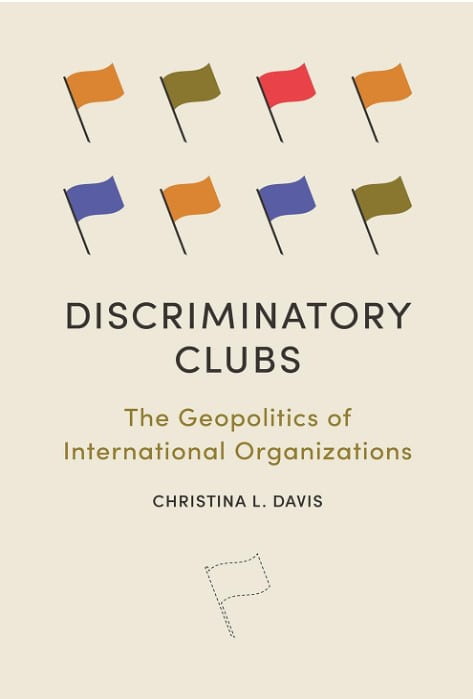
Discriminatory Clubs: The Geopolitics of International Organizations

Discriminatory Clubs: The Geopolitics of International Organizations book cover

Christina Davis’s new book examines the discriminatory logic at the heart of multilateralism.  Overview: Member selection is one of the defining elements of social organization, imposing categories on who we are and what we do. Discriminatory Clubs shows how international organizations are like social clubs, ones in which institutional rules and informal practices enable states to favor friends…

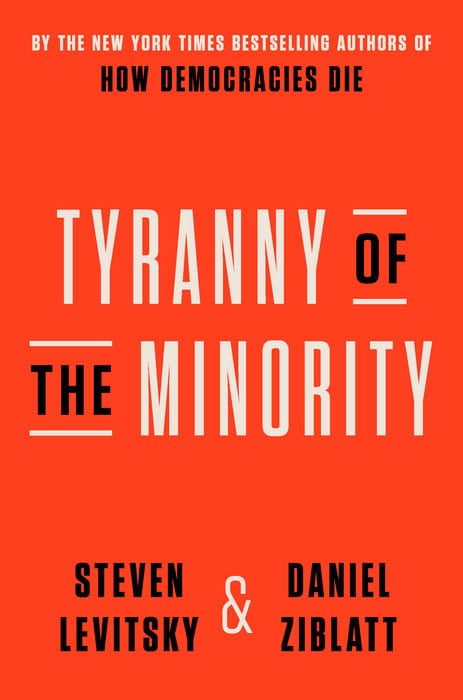
Tyranny of the Minority

Why American democracy reached the breaking point America is undergoing a massive experiment: It is moving, in fits and starts, toward a multiracial democracy, something few societies have ever done. But the prospect of change has sparked an authoritarian backlash that threatens the very foundations of our political system. Why is democracy under assault here,…

Autocracy-favoring Globalization?

George Yean Graduate Student, Comparative Politics & International Relations A working paper: What is the role of globalization for the rise of autocracies worldwide? We show that autocracies are better at exploiting the integrated global economic system. Compared to the pre-1990 period, on average, autocracies performed substantially better than democracies on all major economic indicators…

The Election Effect: Democratic Leaders in Inter-group Conflict (with Sarah Hummel and Yon Soo Park)

Stephen Chaudoin Faculty, International Relations Overview: Many interactions between countries depend on choices made by democratically selected leaders. We argue that the experience of being elected alters subsequent leader behavior at the international level, a phenomenon we call the election effect. Specifically, democratic election intensifies in-group identification and generates a sense of obligation to voters,…

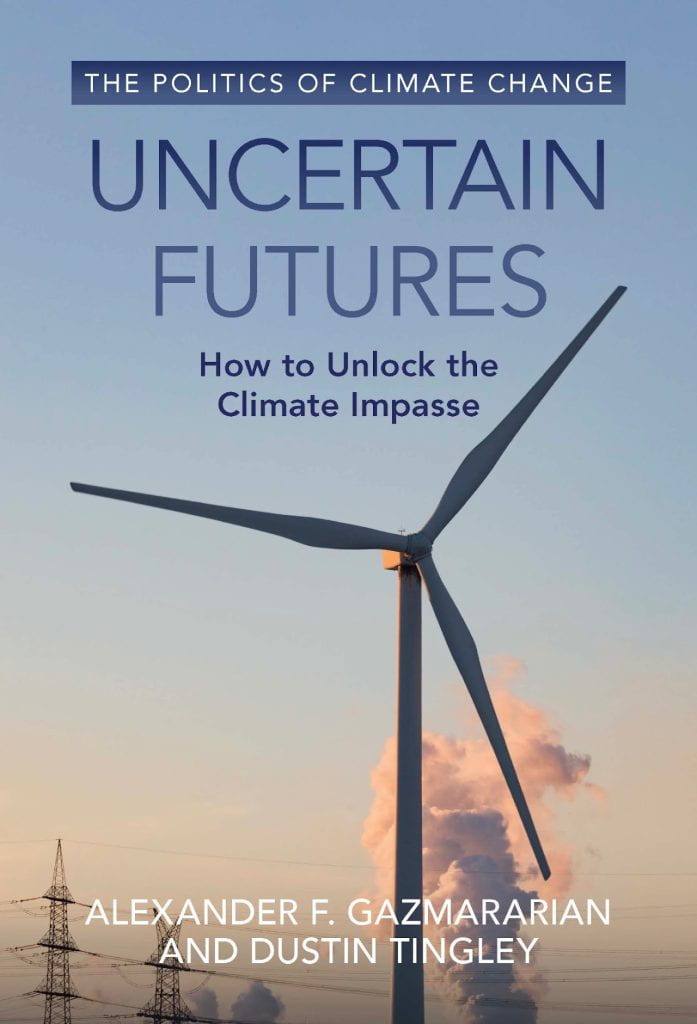
Uncertain Futures: How to Solve the Climate Impasse

Uncertain Futures proposes solutions to make more credible promises that build support for the energy transition. OVERVIEW: Political scientists Alexander F. Gazmararian at Princeton and Dustin Tingley at Harvard have a pathbreaking new book on climate politics. Why is the world not moving fast enough to solve the climate crisis? Politics stand in the way, but experts hope that green…

The Rise and Fall of Imperial China: The Social Origins of State Development

Crop of book cover: The Rise and Fall of Imperial China: The Social Origins of State Development

How social networks shaped the imperial Chinese statewritten by Yuhua Wang Yuhua Wang’s new book highlights a fundamental trade-off in China’s state building, which he calls the sovereign’s dilemma: a coherent elite that could take collective actions to strengthen the state was also capable of revolting against the ruler. OVERVIEW: China was the world’s leading superpower…

If a Statistical Model Predicts That Common Events Should Occur Only Once in 10,000 Elections, Maybe it’s the Wrong Model

Gary King Faculty, Methods and Formal Theory Overview: Election surprises are hardly surprising. Unexpected challengers, deaths, retirements, scandals, campaign strategies, real world events, and heresthetical maneuvers all conspire to confuse the best models. Quantitative researchers usually model district-level elections with linear functions of measured covariates, to account for systematic variation, and normal error terms, to…